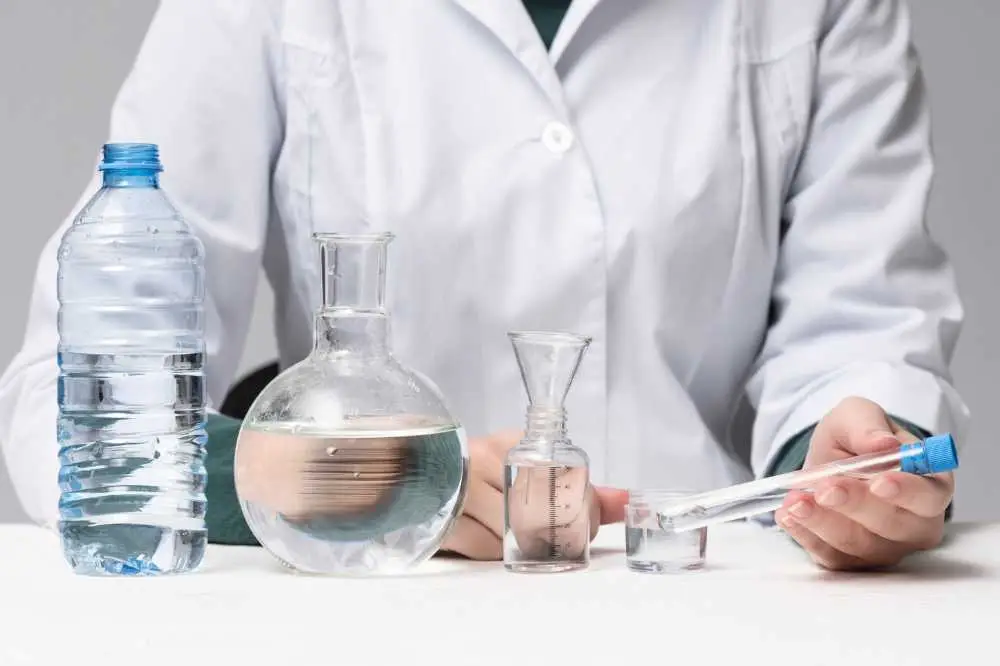
Water testing laboratory Manhattan services are essential for helping schools move beyond a simple pass/fail checklist to establish a truly safe environment for students and staff. Protecting child health is the single most critical priority for educational administrators, facilities managers, and parent-teacher associations across New York City. In a dense urban environment like Manhattan, ensuring a safe learning space extends far beyond classroom security and air quality—it requires a continuous commitment to verifying the safety of the water flowing through school drinking fountains, cafeteria kitchens, and science labs.
Because children are uniquely vulnerable to environmental toxins, school districts operate under strict local and state mandates designed to catch plumbing hazards. However, relying strictly on a regulatory compliance checklist can create a dangerous illusion of safety, as large educational facilities house dynamic, highly erratic plumbing networks. By partnering with a certified water testing laboratory Manhattan, administrators can collect precise samples from individual fixtures, perform advanced diagnostic testing for lead, copper, and bacteria, and receive the clear, science-based data needed to protect child health and maintain reliable, safe facility infrastructure.
The Flaw of Compliance-Only Water Monitoring
Regulatory compliance frameworks are designed to establish a minimum safety baseline across thousands of public and private buildings. They dictate how many samples must be taken, which primary contaminants must be screened, and how often a report must be filed with the city or state.
While these rules are an essential starting point, they fail to account for the unique operational realities of an active school building. A standard compliance checklist can be easily completed during a quiet summer recess or on a single weekend. A technician walks through an empty building, fills a few sample bottles, and ships them to a lab.
If those specific samples show heavy metal levels below the legal threshold, the school checks the box and is cleared for the year.
The problem with this approach is that it captures only a single, isolated moment in time. It fails to evaluate how the building’s water quality changes when hundreds of students return, valves are opened and closed, and hydraulic pressures fluctuate throughout a standard school week. To achieve reliable safety, administrators must look past the checklist and evaluate the physical and biological mechanisms operating within their walls.
The Challenge of Massive Stagnation and “Water Age”
The primary operational hazard in educational facilities is irregular water usage. Unlike commercial offices or residential apartment buildings that maintain a relatively steady water turnover, schools experience massive, systemic disruptions in demand.
- The Weekend Drop: Every Friday evening, water usage drops to absolute zero, remaining completely motionless for over sixty hours.
- Seasonal Vacancies: During extended winter, spring, and summer breaks, water sits stagnant inside massive vertical plumbing lines for weeks or months at a time.
When water stops moving within a building’s internal building plumbing grid, the chemical disinfectants added by municipal treatment plants—such as residual chlorine—naturally decay and dissipate. Without this protective chemical barrier, stagnation allows microscopic biological communities to take root along the inner walls of the pipes, building up thick layers of biofilm.
Furthermore, extended stagnation accelerates the leaching of heavy metals. If a building contains older brass valves, lead-soldered copper joints, or galvanized iron risers, stagnant water acts as a solvent, slowly absorbing lead, copper, and iron molecules.
When students turn on the water fountains on a Monday morning, the first few cups of water delivered can contain significantly higher contaminant concentrations than a sample collected after the system has been heavily flushed.
Identifying Hidden Localized Risks: Beyond the Main Valve
A compliance checklist often relies on testing water at a few centralized points, such as the main water service line entering the building. However, water quality can degrade dramatically as it travels from the basement meter to a third-floor classroom drinking fountain.
[Municipal Water Main in Street] ──► Passes Baseline Test
               │
               ▼
   [Main Building Water Meter]  ──► Passes Baseline Test
               │
               ▼
[Shared Vertical Supply Risers] ──► Physical Vibration / Scale Disruption
               │
               ▼
[Low-Flow Classroom Fountain]   ──► Extended Stagnation / Lead Leaching
In many historic Manhattan school buildings, plumbing networks have been modified, expanded, and repaired over many decades. This architectural variability means a single building core might feature modern copper lines connected directly to legacy lead or brass components hidden deep behind the plaster.
Additionally, modern eco-friendly, low-flow fixtures can create unintended risks. While low-flow fountains are highly efficient, they dramatically reduce the velocity of water moving through localized branch lines. This slow movement increases “water age” right at the point of use, accelerating mineral corrosion and biofilm development.
To catch these issues, a testing protocol must include comprehensive, multi-point apartment water testing logic modified for institutional layouts—sampling first-draw water directly from the individual taps children use every day.
The Emergence of Modern Contaminants: PFAS and Microplastics
A traditional school safety checklist focuses almost exclusively on legacy plumbing hazards like lead and copper. While these heavy metals remain a critical concern, modern environmental science has identified emerging chemical compounds that require advanced analytical oversight.
Per- and polyfluoroalkyl substances (PFAS), widely known as “forever chemicals,” are synthetic compounds that do not naturally break down in the environment. Because they were heavily used in industrial manufacturing, consumer goods, and specialized firefighting foams for decades, trace levels of PFAS have slowly migrated into global water cycles.
Similarly, microplastics—tiny polymer fragments breaking down from synthetic materials—are increasingly detected in urban water supplies.
Because these emerging trace contaminants are completely invisible, odorless, and tasteless, standard school maintenance staff cannot detect them through visual inspection. Evaluating a school’s vulnerability to these modern chemical profiles requires moving beyond standard public health baselines and incorporating advanced, independent water testing strategies into the school’s long-term environmental safety plan.
To explore how local building vintages, regional water infrastructure, and changing environmental regulations vary across different sections of the borough, reviewing a detailed analysis of Manhattan neighborhoods can provide school boards and administrators with critical management context.
Actionable Strategies for Institutional Water Safety
Moving beyond a checklist means transitioning from reactive testing to an active, data-driven water management program. School administrators can implement several practical protocols to protect their facilities:
1. Implement Documented, Multi-Point Flushing Programs
Never rely on the first student of the day to clear out stagnant water. Facilities teams should establish formal, documented flushing protocols. Every Monday morning—and daily after extended holiday breaks—staff should systematically run water at all drinking fountains and kitchen taps for several minutes to draw fresh, chlorinated water from the main vertical risers.
2. Routine Aerator Cleaning and Maintenance
Drinking fountains and bottle-filling stations feature intricate aerator screens designed to shape the water stream. These screens act as physical traps, capturing tiny flakes of pipe scale, rust debris, and sediment traveling through the plumbing loop. If these aerators are not removed and cleaned regularly, the trapped material can continuously dissolve heavy metals straight into the drinking water.
3. Partner with Specialized Water Consultants
True safety validation requires working with independent experts who understand the physics of premise plumbing. A professional consultant will design a customized diagnostic mapping protocol—testing both “first-draw” stagnant water to evaluate localized fixtures and “fully flushed” water to check the health of the building’s main risers.
Prioritizing Children’s Health with Comprehensive Facts
A passing grade on a regulatory checklist is an important administrative milestone, but it should never be confused with absolute safety. By recognizing that large institutional plumbing networks are dynamic, evolving environments, Manhattan school administrators, co-op boards, and facility managers can take proactive steps to eliminate hidden environmental hazards.
To learn more about establishing an advanced diagnostic testing program for your educational facility or residential property, check our comprehensive FAQ for detailed breakthroughs on common urban contaminants, explore our blog for ongoing infrastructure updates, or visit our contact page to consult with our specialized water quality team today.